My School Band Experiences
Holy Cross High School Bands
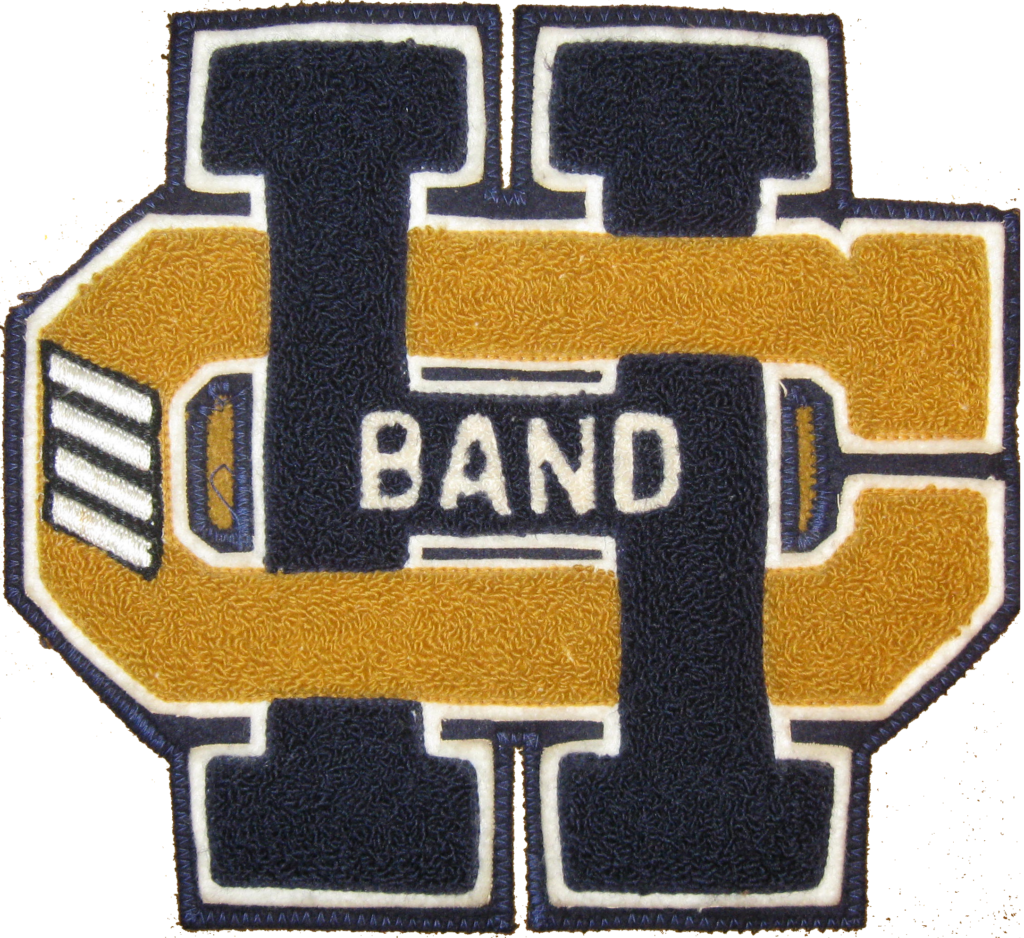
My parents sent me to The Holy Cross School (all boy Catholic school) in New Orleans, because (according to my mother) they were not pleased with the education I was receiving at St. Cecilia Catholic Elementary School. When I enrolled in Holy Cross, I was given the choice of an elective class. I chose Band (Music) and from that point on, music became a major influence in my life. The Music Department, led by Mr. Frank Mannino, had several programs within which students of various levels of talent could fit into. Of primary importance to most band students was 1) Marching Band, which was composed of members that had elementary capability playing their instruments, since the visual effect relied on numbers, then 2) Concert Band, which had a slightly more selective membership due to the more critical emphasis on the quality of music offered to the listening audience, and 3) Stage Band, which, due to the small size of the group and more technical nature of the music played, relied on very selective and mature (playing-wise) membership.
As I was just beginning my experiences with the trumpet in the 7th grade at Holy Cross, I had no expectations of being in the more select band organizations at Holy Cross until I had become somewhat proficient at playing the trumpet. Mr. Mannino, of course, did provide opportunities for beginning musicians to hone their craft, so-to-speak, with opportunities to join the Bengal Band (beginning players), Cadet Band (intermediate players), and then advance to the Tiger Band (mature players).
Although I was not able to locate my 7th grade yearbook for photographic evidence, and since my memory of those times is lacking, I can only assume that I was placed in the Bengal Band in the 7th grade. By the 8th grade, I had been placed in the Cadet Band. And by the 9th grade, my playing was good enough for me to be placed in the Tiger Band.
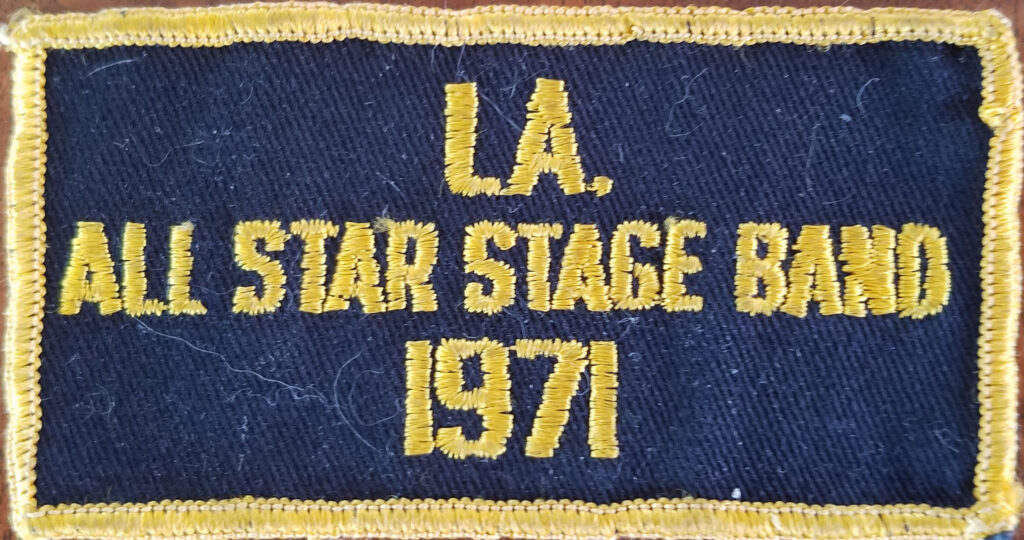
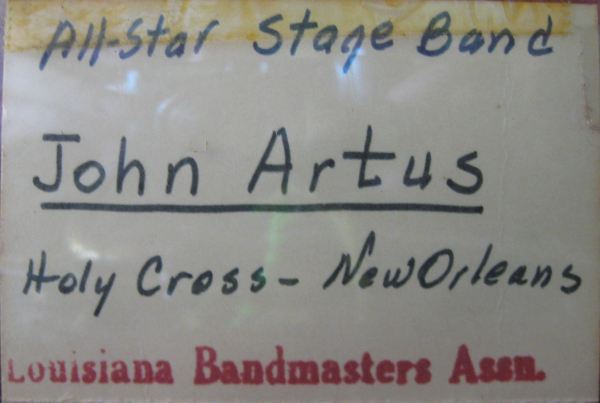
The Stage Band was always a very small and selective group. I consider my self to be very fortunate to have joined the Stage Band in the 11th and 12th grades, after only playing the trumpet for 4 years.
In 1972, the year I graduated from Holy Cross, the yearbook had the following to say about the Music Department programs “Earning superior ratings at all festivals entered, the Tiger bands continued their musical excellence during 1972. Led by Mr. Frank J. Mannino, director of bands, and Mr. Michael Orkus, assistant director, the musicians participated in many concerts, music festivals, and Mardi Gras parades. The Holy Cross bands swept all local and state awards in Louisiana competition, taking superior ratings at the Southeastern, Loyola, and Deep South Festivals.”
I will be posting all the band group photos, with names, that I have available from all my 1968 thru 1972 yearbooks, in a section below.
Marching Band
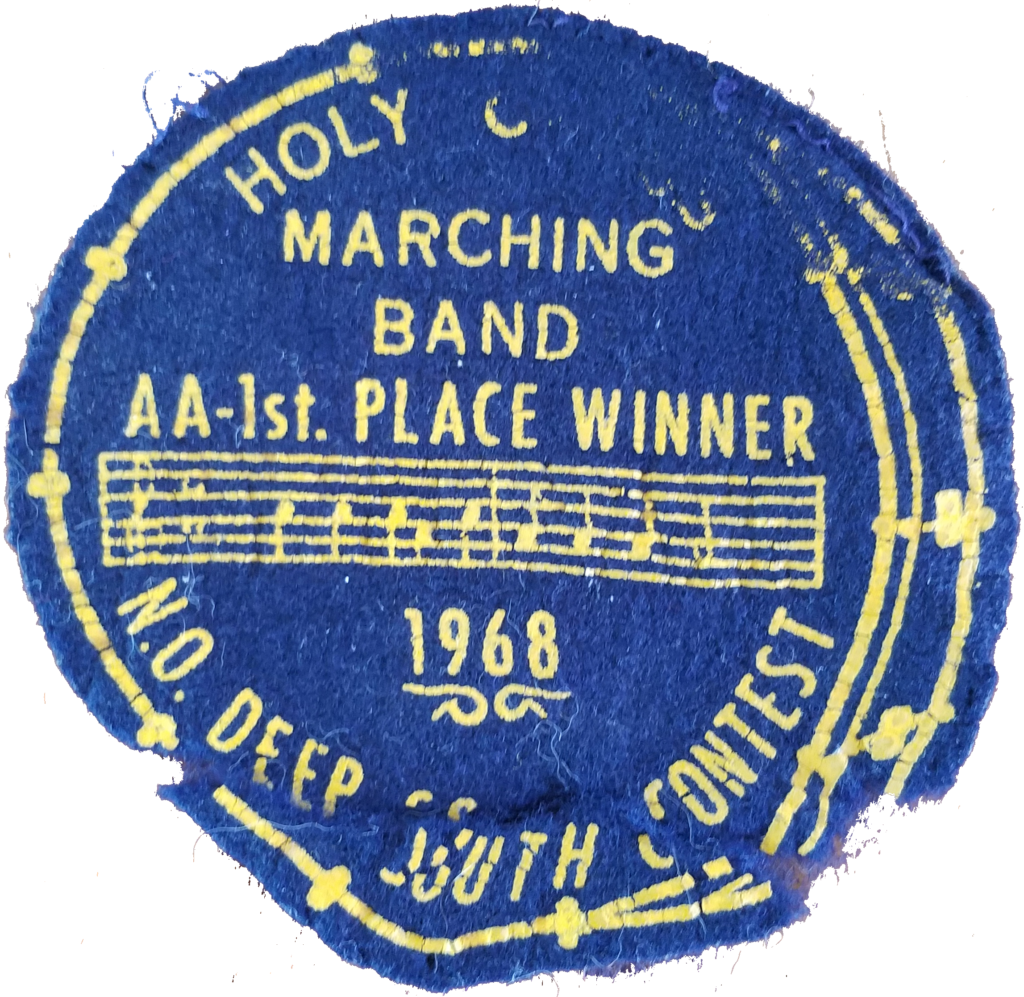
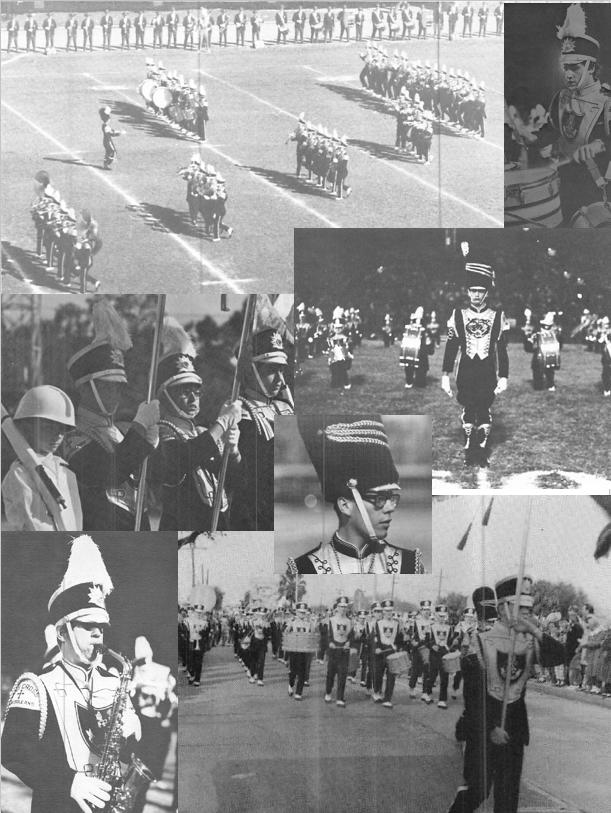
Under the guidance of Mr. Frank Mannino, the Holy Cross Tiger Marching Band achieve numerous State and Regional Competition awards during the years of my participation in that organization. The highlight of our participation in these kinds of events was the Deep South Competition. We also attended event as far away as Enid, Oklahoma and almost always walked away with superior (highest) ratings.
In addition, the Holy Cross Tiger Marching Band was a mainstay of the New Orleans Mardi Gras, marching in several parades each Mardi Gras season in the streets of the French Quarter and throughout the New Orleans area. Note: Mardi Gras parades are not your typical Mid-Western US town parade of just a few blocks. Most Mardi Gras parades (the Holy Cross Tiger Marching Band usually participated in the larger parades of the major Mardi Gras Krewe organizations) that could stretch 5 miles or more. The Holy Cross Tiger Marching Band typically participated in 3 to 4 parades each Mardi Gras season, while I was associated with the organization.
Concert Band
For me, the Holy Cross Concert Band was an introduction into an area of music appreciation that, to be honest, I had very little appreciation for when I joined the Concert Band. I had (some, but) very little exposure to classical music by the major classical composers that my mother occasionally listened to on the home stereo. But, to play wind compositions, concert marches, transcriptions of orchestral arrangements, and renditions of popular music as an activity was something totally new to me, and took time for me to develop an appreciation for this art form.
To me, playing concert music meant playing mostly quiet passages, or marking time while passages were played by the woodwind sections of other sections of the band. I would not say that I was drawn to play concert band music, but rather, I learned from the experience, enjoyed it to some degree, but would not choose it as a style of music to listen to or to actively participate in playing.
In the 7th grade, I started out in the Cadet Concert Band, and then joined the Tiger Concert Band in the 9th grade.
Stage Band
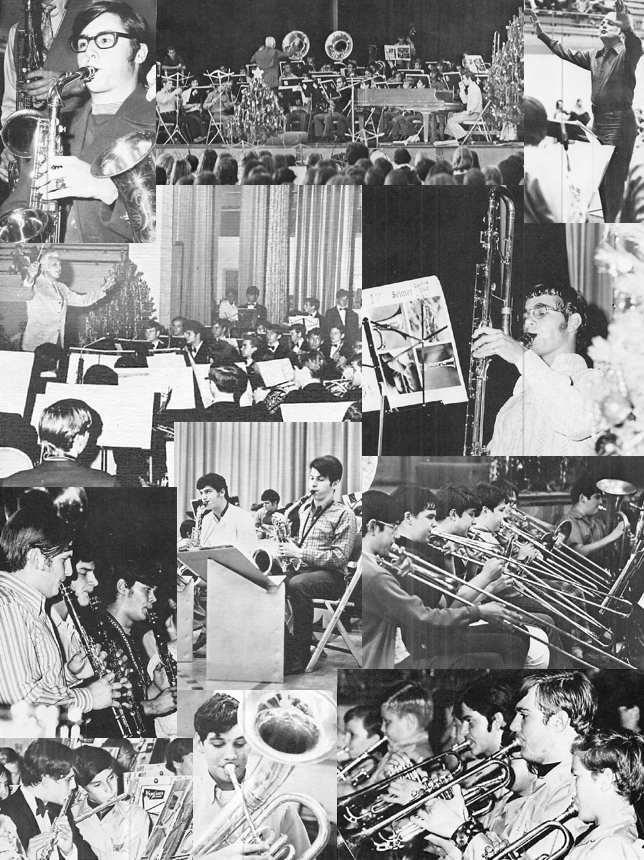
For me, at least, the Stage Band was the pinnacle of achievement within the Holy Cross Music Department. The members of the Stage Band were the top performers in the organization. Since only a few slots were available to fill (generally 5 slots for trumpet), this meant that any given student had to be 1) a top performer in the organization, and 2) wait their turn for a slot to open up (by way of graduation) before you could get into the organization. Of course, talent trumps seniority, and so an exceptionally talented younger student could qualify to play in the Stage Band over a lesser talented senior student.
During my time at Holy Cross, the three graduating years before me (1969, 1970, 1971) were the top performing Stage Bands at Holy Cross, with the 1969 group being the absolute best, IMO.
The 1969 Holy Cross Stage Band is the group performing on the only vinyl record produced by the band while I was in attendance – and fortunate for me, I happened to be attending school then, and I had the foresight to purchase a copy, which I still own. One has only to put ears to this recording to see for one’s self the level of achievement of this group of high school students. They could easily pass as a professional organization with decades of experience. It is truly amazing what a group of talented youth can achieve under the right guidance.
As I had just started playing the trumpet in the 7th grade, I did not have the musical maturity to realize the gold mine that was sitting in front of me. Because, I could easily have attended every practice session of the 1969 and 1970 Stage Bands, and not only enjoyed the experience, but would have learned a good deal, and also be further inspired to improve my playing. Unfortunately, I only attended a few of the 1970 group’s practice sessions.
Other Holy Cross Band Activities
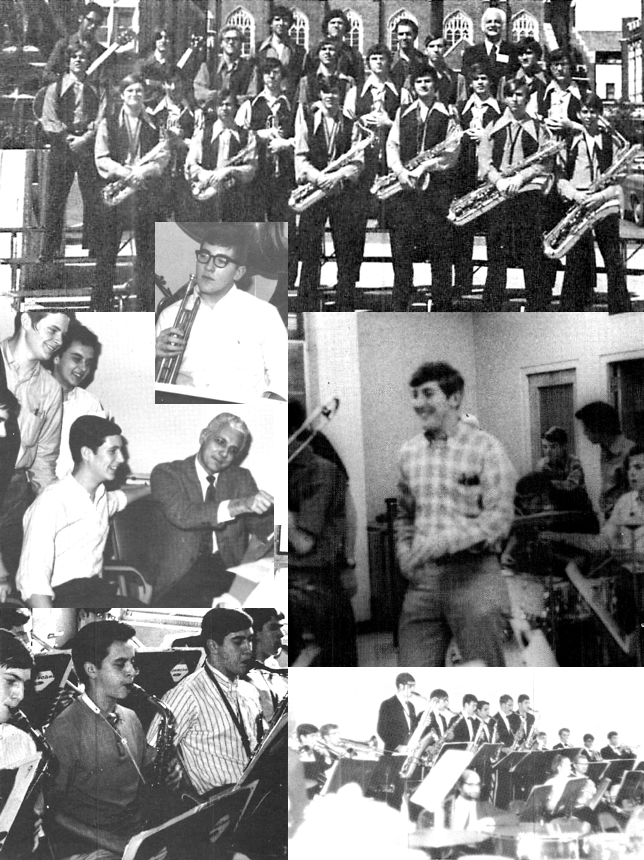
In addition to the groups described above, the Music Department, under Mr. Mannino, organized a Pep Band to play at school events such as pep rallies. I did not become a member of the Pep Band until the 11th grade, because it was a small group, and I had to wait for a slot to open up for me to join. The Pep Band stuck to playing tradition school songs such as Fight Song, and Alma Mater, etc. But, it was a good opportunity to get in more playing time, and offered additional time to associate with fellow music students.
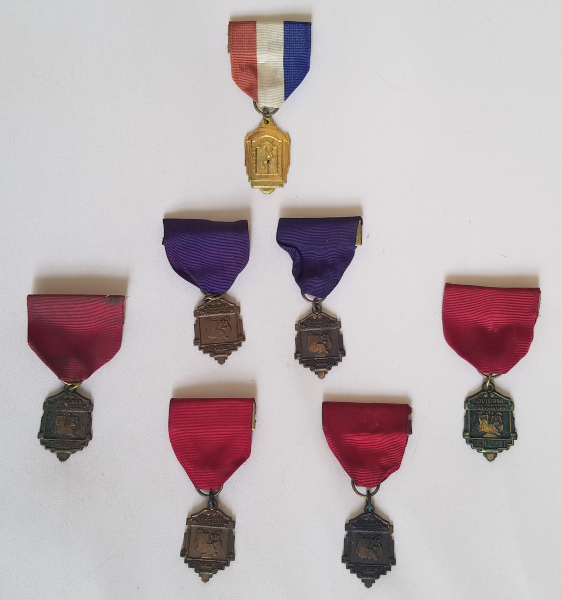
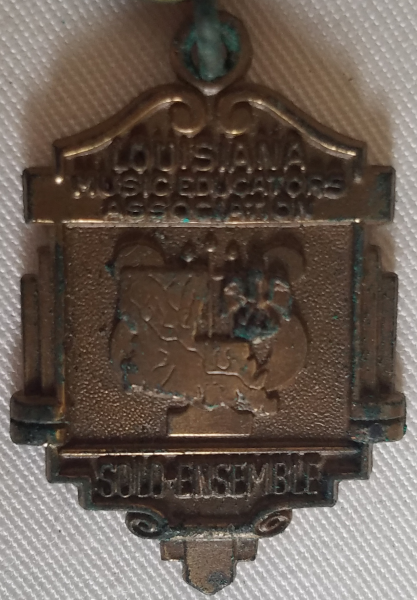
Prof also invited students to participate in Louisiana Music Educators Association (LMEA) sponsored talent competitions for soloists, duets, ensembles, etc. Prof put pressure on me to participate. As an up-and-coming trumpet player in the Music Department of some talent, I obliged, reluctantly, only because I was being strongly encouraged to do so. Standing in front of a panel of judges and playing a solo, then sight reading (playing a piece unseen by my own eyes) was quite intimidating. I believe I started participating in these events in the 9th grade, by playing a solo. I do not recall the pieces I played (I wish I could.) I just recall being extremely nervous about doing so. I did play a duet one year with my fellow trumpet player, and friend, Chuck Sabadie. Again, I do not remember the name of the piece we played. Back then, I believe the LMEA used a rating system of Superior, Excellent, and Satisfactory (they now use a different system.) We were awarded medals of various colors, which are shown here. But I do not know for which events I received these medals, nor for which rating the different medals apply. I am going to guess that purple medals are for Superior ratings, and red medals are for Excellent ratings. The red-white-and-blue medal is probably a participation medal of some kind for some event the band attended, but that memory has long been erased.
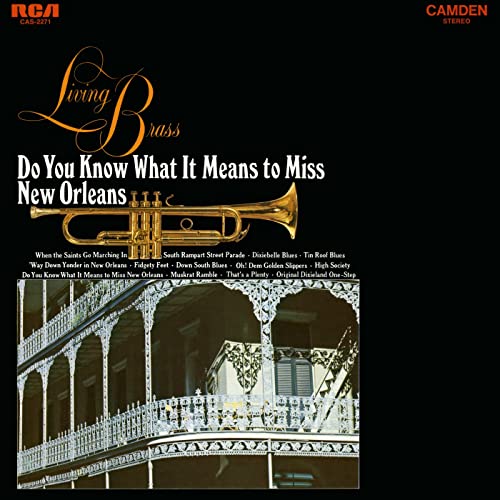
One memorable event, for me at least, was when the Holy Cross Tiger Band played in front of New Orleans City Hall. We played an assortment of music, which I honestly do not remember, except for a piece in which I had a major appearance. I always remember the tune was a favorite New Orleans Dixieland tune called “Do You Know What It Means To Miss New Orleans.” But I was never aware of anything more than that until one day, when I was listening to another one of my mother’s LP albums by the Living Brass, titled “Do You Know What It Means To Miss New Orleans.” I had listened to this album many times, it’s one of the few Dixieland albums out there not produced by a Dixieland icon such as Pete Fountain or Al Hirt. And apparently, there are few copies of this particular LP available these days. My mother happened to win this is some radio contest, or something similar. Anyway, one day, long after graduating from Holy Cross I was listening to this album, when the title tune came up, and I then it hit me – this is the very arrangement that we played in front of City Hall. Prof must have gotten hold of this particular arrangement, and that is the tune we played. I never was aware of that fact until that day, when I wasn’t thinking about anything in particular, and the association all of a sudden became clear in my mind. I wasn’t the only soloist. There was a clarinet and trombone player, as front men, as well. I am quite certain that this occurred during my senior year at Holy Cross. Here is the tune as played by the Living Brass.
Living Brass – Do You Know What It Means To Miss New Orleans.flac
We were all in the band issued certificates of appreciation by the City of New Orleans. I still have mine, but it is at my sister’s house at the moment. Next time I visit her, I will take a photo of that certificate, and post it here.
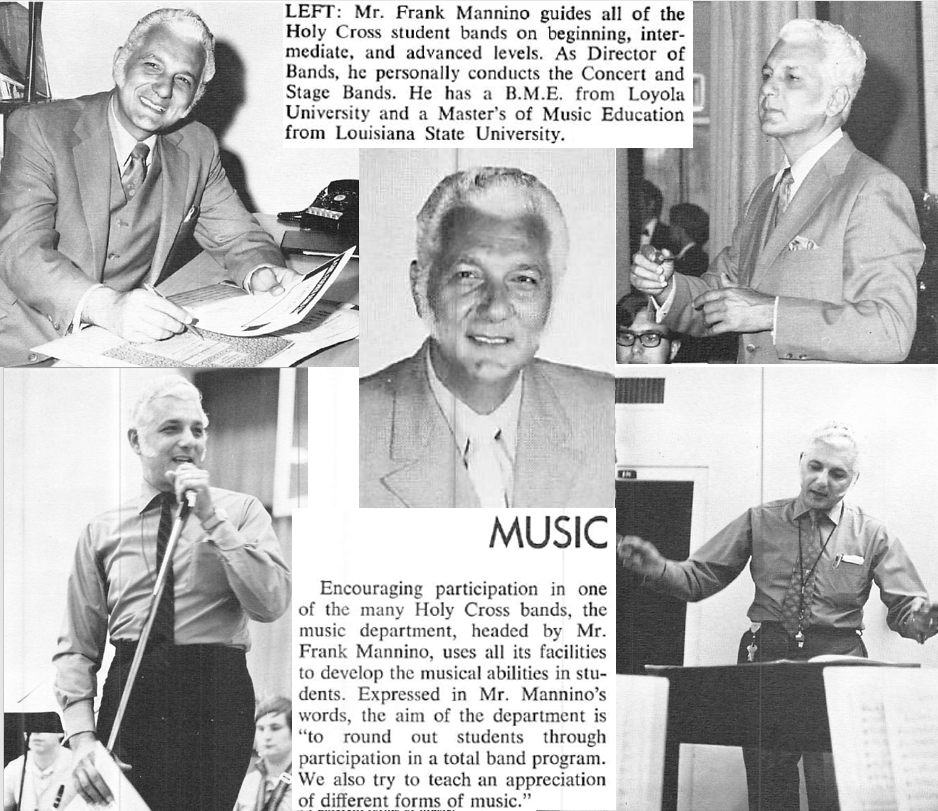
Mr. Frank J. Mannino
- July 27, 1926 – October 20, 2007
Mr. Frank J Mannino, who went by the stage name of “Frankie Mann”, conducting the Frankie Mann Orchestra in New Orleans, La, received his music education degree from Loyola University, and his masters degree from Louisiana State University (LSU). He was an educator for his entire career, touching and inspiring many lives along the way. Mr. Mannino was the past president of the Louisiana Music Educators Association (LMEA), and was inducted into the Music Educators Hall of Fame. He was considered to be a musical father for so many and responsible for bringing jazz education to Louisiana.
Students at Holy Cross referred to Mr. Mannino as “Prof”. Also known as “The Silver Fox”, Mr. Mannino was well known, and respected throughout the New Orleans music scene.
I took the opportunity to visit “Prof” at his home in Metairie, Louisiana, in the 1980s, a few years after I had begun my professional engineering career. It was a great pleasure to have studied under Mr. Mannino, and to have had a chance to revive our association prior to his passing in 2007.
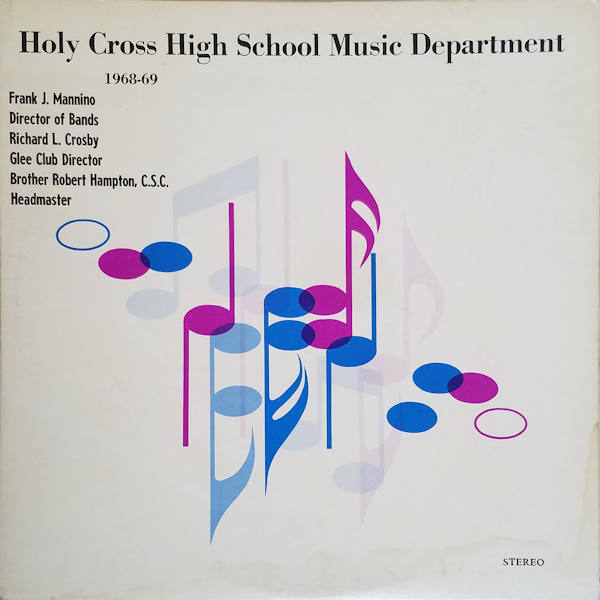
1968-69 Holy Cross Music Department Vinyl Recording
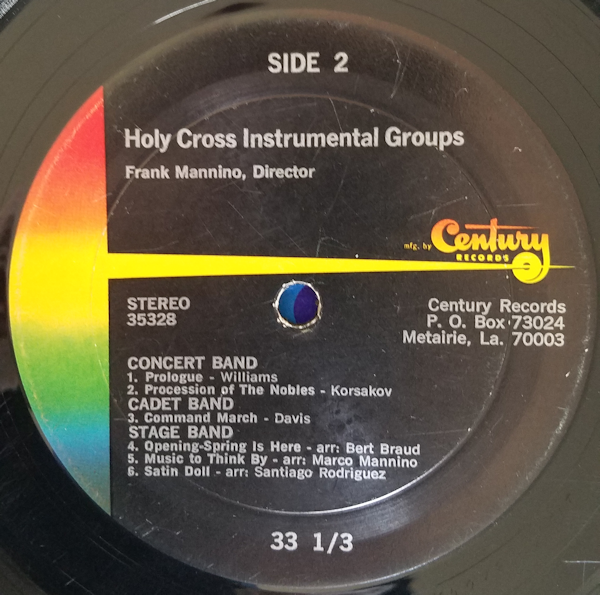
At the conclusion of the Holy Cross 1968-69 school year, “Prof” (together with the Holy Cross Glee Club) produced a vinyl LP recording of the Music Department’s major groups. This included the Holy Cross Tiger Concert Band, Cadet Concert Band, Tiger Stage Band, and Glee Club (vocal singing group). I had the foresight at the time to purchase a copy, which I still own today. While I did not take good care of this LP, which resulted in many scratches being inflicted on the record, nonetheless, this is a very valuable historical artifact for me that contains the only piece of “evidence” that I can direct someone to to appreciate the quality of the organizations under Mr. Mannino’s direction. This is especially true for the Stage Band recording of the 1968-69 group in competition at the Loyola Jazz Competition held each year (at that time) for New Orleans area schools. This group (1968-69 Stage Band) definitely could pass for a professional organization. The precision and tightness of the group is immediately apparent when listening to these recordings.
Also note that two of the pieces played by the Stage Band at this event were arranged by band members. Marco Mannino arranged “Music to Think By”, and Santiago Rodriguez arranged “Satin Doll”.
I will be posting audio recordings in FLAC format of all the tracks on side 2 of this LP. I mentioned in an earlier posting that this album of mine has many scratches due to my not taking goods care of the album (I did not at the time appreciate the value of the LP that would accrue for me in later years.) Yet, all is not lost. I will be taking on the task of digitally removing noise from scratches from the three Stage Band tracks only. This is a grueling, time-consuming, and labor-intensive task. But, for these tracks, the time is well spent, IMO.
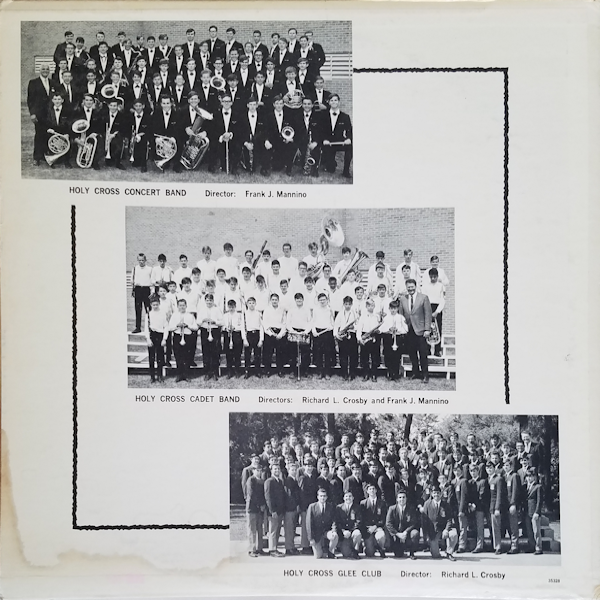
Holy Cross Band Group Photos
This section includes links to pages on this website that contain group photos (with names) of the various band groups in the Holy Cross Music Department during the time I attended Holy Cross (except for 1967 in which my yearbook has been somehow misplaced.)
Even though I would only personally know students of one-to-two years either my elder or younger, I still included all group photos, with names, even though I would not, in some cases, personally know anyone in those groups.
My 8th Grade (Graduating year 1968)
My 9th Grade (Graduating year 1969)
My 10th Grade (Graduating year 1970)
My 11th Grade (Graduating year 1971)
My 12th Grade (Graduating year 1972)
Holy Cross Students that were awarded special recognition for outstanding musicianship
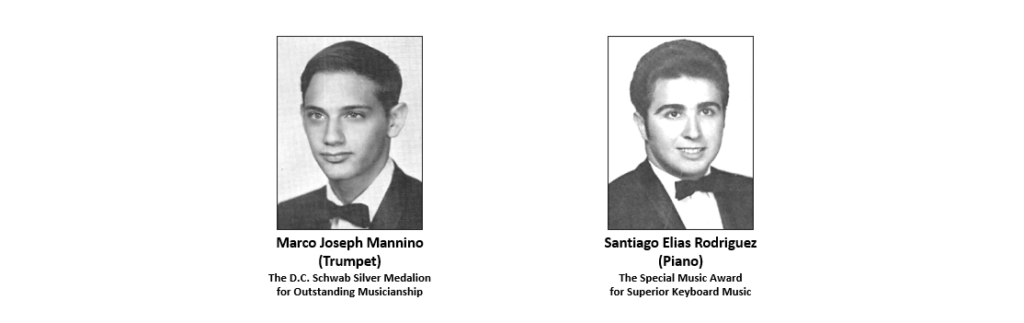
I hold a great deal of respect for fellow students that awarded special recognition for their musical talent. This section duplicates the recognition provided in the Holy Cross yearbooks for graduating years 1969 through 1972. At least two of these, that I know of (Santiago Rodriguez and Michael Genevay) have gone on to develop careers in the music industry. I (re)-present these awards issued by The Holy Cross School, as a sign of my respect for the talent displayed by these fine adolescent musicians.
Graduating Year 1969
Graduating Year 1970

Graduating Year 1971

Graduating Year 1972

Bleu Raeders Drum & Bugle Corps
This section is still being worked on. Stay tuned for future updates!
LSU Tiger Marching Band
This section is still being worked on. Stay tuned for future updates!
Why Did I Choose The Trumpet?
After graduating from college and taking on a job in the engineering industry, I continued to pursue my music listening interests. After some time, and after following the works of various jazz artists, especially trumpet players, I wondered to myself why I chose the trumpet to play in High School and beyond. At first, I thought it may have been the influence of an LP album my mother had bought: Doc Severinsen’s Command Performances. But, recently, I inquired of my mother about that, and she indicated she did not purchase the LP for me, that she enjoyed listening to Doc Severinsen, and it just happened to be part of her collection that I stumbled upon.
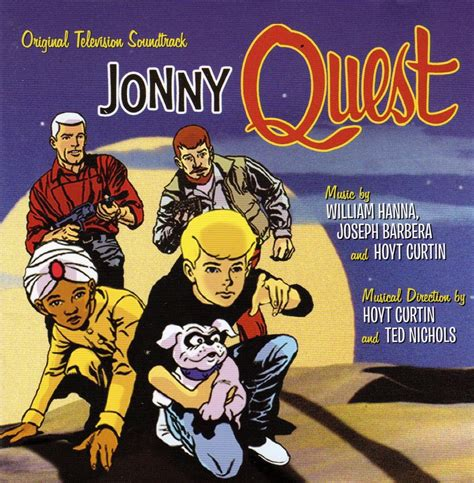
After more thought, it came to me one day. As a young kid (maybe age 8-10), I used to wait on Saturday morning for the Jonny Quest animated adventure series to come on TV. The show was fun and interesting to watch. But, as well, the music was, beyond a doubt, a large step above most of what you would hear in youth programming at that time. The score, composed by Hoyt Curtin, was played by some of the best jazz band performers in the Los Angeles area at the time (mid 60s). I specifically recall, being in position at the end of the program, with my ear right up to the TV speaker, to here the Closing Theme, with that final scream of the trumpet high note at the end. I did that at every opportunity I had to catch the program, and that experience sunk into my brain. I am now quite sure that this experience led to me telling “Prof” that I wanted to play the trumpet on that first day at Music Class at Holy Cross, without my specific reference at the time back to my listening experience with Jonny Quest and the fantastic music composed and directed by Hoyt Curtin.
The Jonny Quest series has probably dropped out of the sight of most folks too young to have seen it. So, I have included clips of Hoyt Curtain’s music here (with and without programming sound effects) for you to appreciate (hopefully) the talent of Hoyt Curtin as a composer, and the exciting nature of his compositions. Note: Even as a young 8-10 year old, I noticed the “clams” (bad notes) produced by the trumpet section, and never understood why they did not record more takes until they could produce a track with no clams.
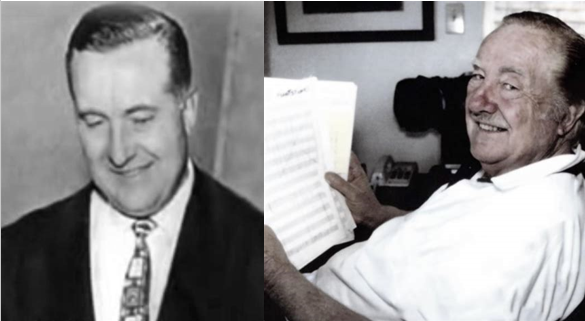
There is an interesting story about Hoyt Curtin, and his purposely challenging compositions for the trombone section, as told by Chris Webber at this YouTube site, the audio of which is reproduced here.
Mr. Joseph E. Lewis
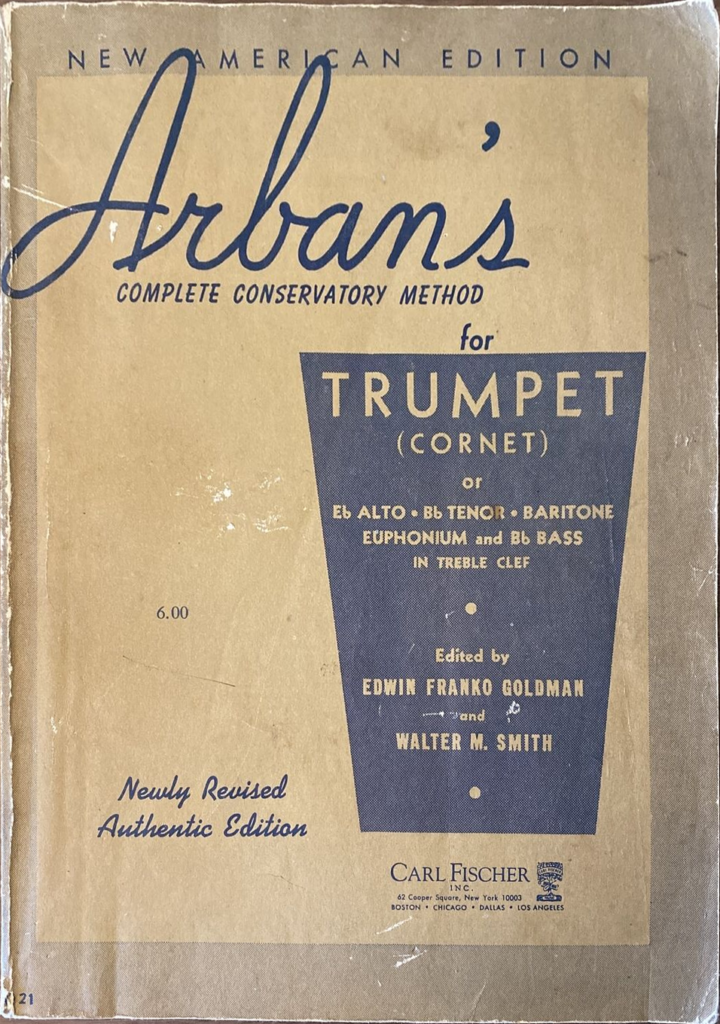
During my high school years, as my exposure to the music world expanded I learned about how things were done in that world, and as my trumpet playing matured, I eventually realized the need for private instructions to advance my trumpet playing technique. Honestly, I do not remember how it is that I selected a private instructor, probably either through my band director, Mr. Frank Mannino, or through my association with my friend in the Holy Cross Band, Ray Lewis. But, I found myself one day figuring out how to take the city bus to XXXX Broad Street in New Orleans, where, in a small room on the Xth floor, I met with Mr. Joe Lewis, Rays’s dad, for one hour, twice a week. Here, I was exposed, for the first time, to practice techniques that any serious trumpet player should be familiar with. “Papa Joe” instructed me to obtain “Arban’s Complete Conservatory Method for Trumpet” by Joseph Jean-Baptiste Laurent Arban. With this material, I was exposed to very challenging and demanding musical etudes designed for the trumpet that compelled me to appreciate and respect the finer ways of playing the trumpet. During my time with Mr. Lewis, I began to expand my trumpet playing ability which led to a higher level of participation in my high school and college band organizations.
Mr. Joe Lewis had built a reputation in the New Orleans area as a talented and sought-after trumpet player for various gigs in the New Orleans area. I requested, and obtained the following background information on Mr. Joe Lewis, from his son, my friend, Ray Lewis.
In his professional playing career, Mr. Joe Lewis played and performed with many local band leaders, including Mike Lala, Harry Morel, Frank Mannino, Jimmy Maxwell, Val Barbara, Rene Louapre, Milton Bush, Mike Caplin, to name just a few. Mr. Lewis played and performed for many years in the New Orleans Summer Pops Orchestra as well as for many of the various Mardi Gras Carnival Ball organizations in New Orleans, including the famous Krewe of Rex Organization. Along with his playing abilities, Mr. Lewis devised, wrote, and transcribed many musical themes and scores for various organizations, clubs, schools, and bands.
It was Mr. Joe Lewis with whom I consulted about obtaining a better instrument, and who arranged for me the purchase of My Getzen Eterna trumpet.